A Continent In Deep Freeze

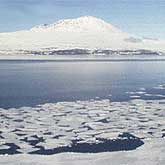 The continent of Antarctica
is home to a uniquely beautiful and harsh environment that has changed
little in the last 30 million years. The continent, approximately twice
the size of Australia, lies mainly within the Antarctic circle and is
surrounded by ocean. It is covered almost entirely by a sheet of ice
and snow which has an average thickness of approximately 6,500 feet,
comprising slightly more than 90% of the world's ice and 70% of the
world's freshwater resources. This thick sheet of ice - also known as
the ice cap - reflects most of the heat generated by the sun back into
the atmosphere, leaving the continent with an annual mean temperature
of -57 Fahrenheit.
The continent of Antarctica
is home to a uniquely beautiful and harsh environment that has changed
little in the last 30 million years. The continent, approximately twice
the size of Australia, lies mainly within the Antarctic circle and is
surrounded by ocean. It is covered almost entirely by a sheet of ice
and snow which has an average thickness of approximately 6,500 feet,
comprising slightly more than 90% of the world's ice and 70% of the
world's freshwater resources. This thick sheet of ice - also known as
the ice cap - reflects most of the heat generated by the sun back into
the atmosphere, leaving the continent with an annual mean temperature
of -57 Fahrenheit.
The continent of Antarctica
is home to a uniquely beautiful and harsh environment that has changed
little in the last 30 million years. The continent, approximately twice
the size of Australia, lies mainly within the Antarctic circle and is
surrounded by ocean. It is covered almost entirely by a sheet of ice
and snow which has an average thickness of approximately 6,500 feet,
comprising slightly more than 90% of the world's ice and 70% of the
world's freshwater resources. This thick sheet of ice - also known as
the ice cap - reflects most of the heat generated by the sun back into
the atmosphere, leaving the continent with an annual mean temperature
of -57 Fahrenheit.Antarctica is the world's coldest and most pristine environment. The continent is also the driest and windiest landmass on Earth, with winds reaching speeds of up to 200 miles per hour and areas where rain has not fallen in millions of years. Antarctica also is the highest continent on earth, with an average elevation of 7,380 feet.
Approximately 4,000 scientists and researchers live in Antarctica during the austral summer, with about half of these being American. During the winter months, however, this number is greatly reduced to a total of about 500 people. Although the number of people living on the Antarctic continent remains quite small, scientists have been blamed for pollution problems ranging from sewage leaks to oil spills.
